

- 23 August, 2026
- 123
- 0
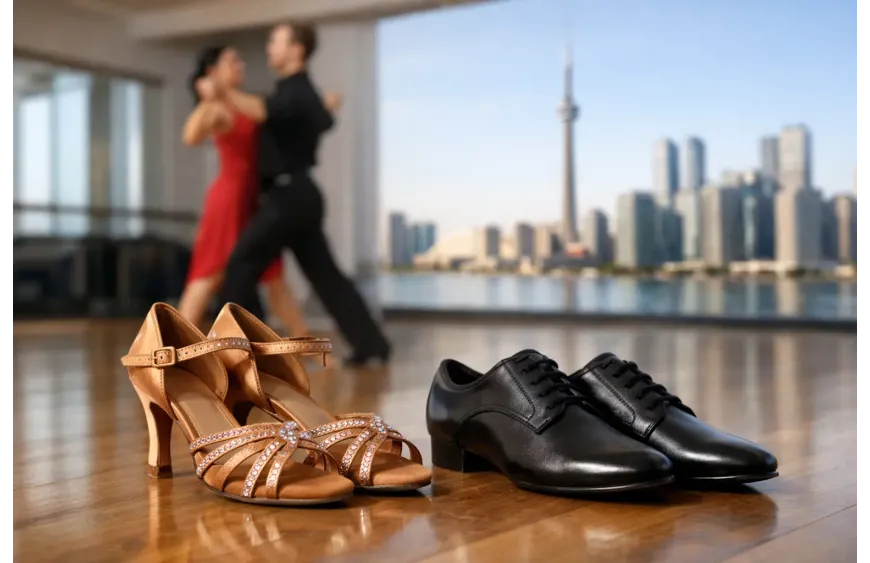
A shoe can look perfect on the shelf and still feel wrong after one song. A heel that slips, a toe box that pinches, or a sole that grips the floor too much can make a beginner feel unsteady and distract an experienced dancer from technique. Searches such as “ballroom dance shoes near me,” “dance shoes near me,” and “dance store Toronto” usually mean the same thing: you want shoes that fit your feet, your dance style, and the floor you actually dance on.
For Toronto and GTA dancers, choosing specialist dance footwear is less about finding the flashiest pair and more about getting the right combination of support, flexibility, balance, and presentation. The best choice for a waltz class may not be the best choice for salsa socials, a teaching day, or a competition.
What to Look for in Ballroom Dance Shoes Near Me
Ballroom shoes are built for movement that everyday shoes are not. Their suede soles allow controlled turns and smooth travel across a proper dance floor, while their construction gives the foot flexibility for pointing, rolling through the ball of the foot, and maintaining connection to the floor.
Start with the dance style. Standard ballroom dancers generally need a stable, elegant shoe that supports longer, gliding movement. Ladies often choose a closed-toe court shoe for ballroom and American smooth, while men commonly wear a traditional ballroom shoe with a secure lace-up fit. Latin dancers tend to need more forefoot flexibility and a closer, more responsive fit. Open-toe Latin sandals and Latin shoes help show footwork while allowing articulation through the toes.
Heel height matters, but it is not a test of how serious you are. Beginners often feel more secure in a lower or wider heel. A more experienced dancer may prefer a higher, slimmer heel for line and presentation, provided they can maintain balance and use it comfortably. Social dancers and teachers may prioritize a heel that remains comfortable through several hours of dancing rather than choosing a competition-focused style.
Fit should feel close, not painful. Dance shoes commonly stretch and mold slightly with wear, especially satin, leather, and soft dance materials. A shoe that begins too loose can become difficult to control. At the same time, your toes should not be sharply curled, numb, or forced against the end of the shoe. The right fit gives you security without stopping natural foot movement.
Why a Dance Shoes Store Near Me Makes Fitting Easier
Online shopping is convenient, especially when you know your preferred brand, size, and style. But footwear is one category where personal guidance can prevent a disappointing purchase. Different brands and shoe shapes can fit very differently, and street-shoe sizing is only a starting point.
An in-person fitting is particularly helpful for your first pair of ballroom or Latin shoes, for young dancers whose feet are still growing, and for dancers who have had trouble with heel slipping, bunions, narrow heels, wide forefeet, or uneven sizing between feet. It is also useful when moving from a low practice heel to a higher Latin heel, or from social dance footwear to a shoe intended for showcases or competition.
At Dancewear Champions, local shoppers can receive personal shoe-fitting guidance in Thornhill, with accessible parking and a welcoming boutique setting. Bringing the type of socks, tights, or dancewear you normally use can make the fitting more accurate. If you dance in both ballroom and Latin, mention that before trying on styles. One pair can sometimes cover both needs at a recreational level, but dancers who train regularly often benefit from separate shoes for each discipline.
Choose Shoes for How and Where You Dance
The phrase “dance shoes near me” covers many very different needs. A shoe that works beautifully at a ballroom studio may not suit every venue, and a dancer’s schedule makes a real difference.
For ballroom and standard, look for stability, clean lines, and smooth movement. Closed-toe shoes are a classic choice for ladies, especially for waltz, foxtrot, tango, quickstep, and American smooth. Men’s ballroom shoes should feel supportive through the arch and stable at the heel while allowing easy movement across the floor.
For Latin, salsa, bachata, and rhythm, secure straps are essential. A sandal should hold the foot in place during quick direction changes, spins, and weight transfers. Check that the straps sit comfortably without cutting in, especially around the toes and ankle. If the shoe has an ankle strap, adjust it snugly enough to stabilize the foot without restricting circulation.
For practice and teaching, comfort and durability usually lead the decision. Practice shoes may offer a lower heel, broader base, or more cushioned feel for long sessions. They are a practical choice for instructors, new dancers building confidence, and anyone who wants dance-specific movement without wearing their dressier pair every day.
For social dancing, the venue floor matters. Suede soles are ideal for most studio floors, but they can collect dirt or become too slippery depending on the surface. Outdoor patios, rough floors, and wet conditions can damage dance soles quickly. If you attend a social at a non-dance venue, ask whether the floor is suitable before wearing your best ballroom shoes.
Do Not Forget the Details That Affect Comfort
The shoe itself is only part of the equation. A few small decisions can make a major difference during class, practice, or an event.
First, consider whether you need a closed toe or open toe. Closed-toe ballroom shoes create a polished standard look and offer more toe coverage in a busy class. Open-toe Latin sandals can provide flexibility and visual detail, but dancers should be mindful of foot placement when the floor is crowded.
Second, check the fastening system. Buckles, quick hooks, laces, and straps all serve different needs. A quick-release buckle is convenient, but the strap must still be adjusted carefully. Men’s lace-up shoes allow a customized fit through the instep. Youth dancers often benefit from styles that are secure and straightforward to fasten.
Finally, protect the sole. Suede soles need occasional brushing to remove compacted dirt and restore controlled traction. Use a shoe brush designed for dance footwear and store shoes in a breathable dance bag rather than tossing them loose into a gym bag. Keeping a dedicated pair for indoor dancing helps extend their life and keeps the sole performing as intended.
How to Shop a Dance Shoes Sale Without Choosing the Wrong Pair
A dance shoes sale is a good opportunity to add a practice pair, replace a well-worn favorite, or try a style you already understand. It should not be a reason to settle for a size or heel height that does not work for you.
Before choosing sale footwear, think about whether it solves a specific need. Maybe your social dance shoes are worn down, you need a lower heel for teaching, or your child needs a properly fitted pair for the next stage of training. Check the intended discipline, sole type, width, and closure just as carefully as you would with a regular-priced shoe.
If you see “I Love Dance Shoes” among the brands or styles you are considering, focus first on fit and purpose rather than the label alone. Brand preferences can be helpful once you know what suits your foot, but every collection can include different lasts, heel shapes, and materials. A style that is ideal for one dancer may not be the right choice for another.
When One Pair Is Enough and When It Is Not
For a first-time adult dancer taking one weekly social ballroom or Latin class, one versatile pair may be all you need. A comfortable, secure shoe with a manageable heel gives you a proper dance sole and helps you build technique without overcomplicating the purchase.
As your dancing becomes more specific, separate pairs make more sense. A Standard dancer may want closed-toe ballroom shoes for lessons and performance, plus a comfortable practice shoe. A Latin dancer may keep a dedicated sandal for showcases or competition and another pair for daily training. Teachers often benefit from footwear designed for long days on their feet.
The right dance shoes should make you feel more connected to the floor, not more worried about your feet. Whether you are preparing for your first lesson, a social night, a showcase, or a DanceSport event, choose the pair that lets your technique and confidence take the lead.
Tags ballroom dance shoes near me, dance shoes near me, dance store Toronto, dance shoes store near me, i love dance shoes, dance shoes sale
Related Products
Sale
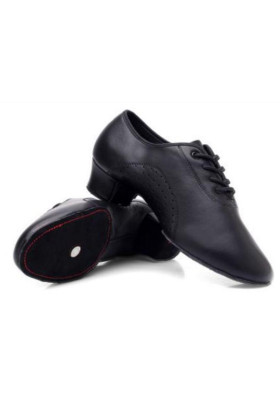
Latin Dance Shoes - Heel 1.5 inch
$99.00CAD $75.00CAD

Sale
Low Heels Dance Shoes 14 - Heel 1.5
$140.00CAD $75.00CAD
Sale
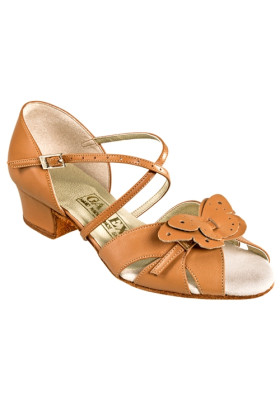
Galex - Butterfly - Heel - 3.5cm
$180.00CAD $170.00CAD
Sale
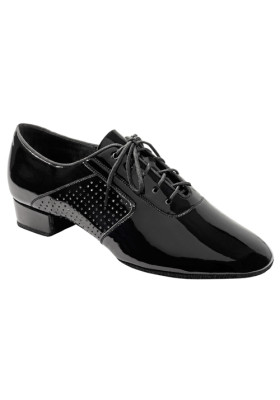
Galex - Boys Dance Shoes - Black Patent - Heel 1 inch
$225.00CAD $180.00CAD
Sale
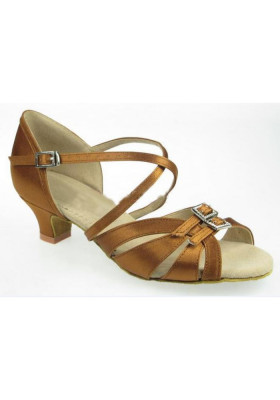
Low Heels Dance Shoes 15 - Heel 1.5
$140.00CAD $75.00CAD

-280x400.jpg "Latin Dance Shoes - Black Patent - Heel 1.5 inch")
Sale
Latin Dance Shoes - Black Patent - Heel 1.5 inch
$99.00CAD $65.00CAD

Sale
Dance Shoes - Heel 5.5 cm
$140.00CAD $75.00CAD

Sale
Dance Shoes - Heel 7.5 cm
$140.00CAD $75.00CAD

Sale
Girls Low Heels Dance Shoes - White leather - Heel 3.5cm
$75.00CAD $70.00CAD