


- 23 November, 2026
- 21
- 0
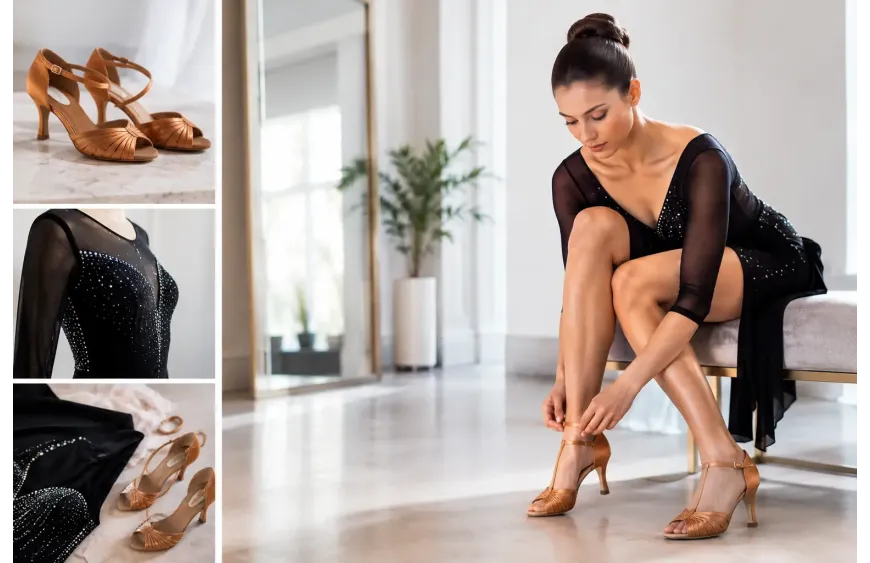
The music starts, you take your opening position, and every detail becomes visible: your line, your footwork, your connection, and the way your outfit moves with the choreography. A useful ballroom showcase example is not about copying one dress or one costume. It is about seeing how clothing, shoes, grooming, and rehearsal choices work together to support a specific performance.
A showcase sits somewhere between a social dance and a competition. You may be performing one polished routine for your studio, friends, family, or a larger audience. That means your look should feel more intentional than regular practicewear, while still allowing you to dance naturally. The right choice depends on the style, the venue, the choreography, your partner, and how comfortable you feel being seen.
A Ballroom Showcase Example From Start to Finish
Picture a couple performing a romantic foxtrot at an evening studio showcase. Their choreography includes long traveling steps, a few turning figures, and a quiet opening that builds into a more expansive finish. The woman wants elegant movement without the formality of a full competition gown. The man wants to look polished but does not want a costume that feels stiff or overly theatrical.
For her, a black or deep jewel-tone ballroom skirt paired with a fitted top or bodysuit creates a clean silhouette. A skirt with enough fullness to respond to rotation will show the rise and fall of the dance, but it should not be so long that it catches under her heel. If the venue lighting is low, subtle rhinestone details or a little shimmer near the neckline can help her read from the audience without overpowering the routine.
For him, black ballroom pants, a properly fitted dance shirt, and a dance vest or tailored overshirt may be all he needs. The goal is a neat frame and unrestricted movement through the shoulders and back. A shirt that pulls at the buttons during promenade or lifts out of the waistband during turns can distract both the dancer and the audience. A close fit is helpful, but restrictive is not the same as polished.
Both dancers wear standard ballroom shoes with a secure fit and soles suited to the floor. The woman has rehearsed in the same heel height she will use for the performance. The man has checked that his shoes are clean, brushed, and broken in. Those small decisions matter because a showcase is not the place to test a new heel, an untried shoe size, or a garment that has only been worn for a few minutes in front of a mirror.
What Makes This Look Work
This example works because the clothing supports the character of foxtrot. The softer skirt movement complements the dance's smooth travel, while the man's clean, classic outfit keeps the visual focus on the partnership. Their colors coordinate without matching exactly. Most importantly, neither dancer has sacrificed posture, comfort, or foot placement for decoration.
The same formula would not necessarily suit every dance. A dramatic skirt may be ideal for waltz but too cumbersome for fast jive. A fitted Latin dress that looks excellent in cha-cha may not create the floating lines wanted for American smooth. Start with the dance, then choose the outfit.
Build the Outfit Around Your Dance Style
Ballroom showcase attire should make the style recognizable before the first major figure. Standard and smooth dances often benefit from longer lines, fluid fabrics, and a more refined presentation. Latin, salsa, and bachata typically call for closer-fitting pieces, strategic movement in fringe or draping, and footwear that supports quicker weight changes.
For a waltz, foxtrot, tango, or Viennese waltz, consider a skirt, dress, or gown that moves when you turn but stays manageable when you travel. Practice skirts can be an excellent option for dancers who want ballroom shape without a full competition costume. A bodysuit or fitted top underneath helps keep the outfit tidy through arms overhead, shaping, and repeated rotations.
For rumba, cha-cha, samba, jive, or an energetic social Latin routine, choose apparel that allows clear hip action and unrestricted leg movement. A Latin dress, skirt and top combination, or performance bodysuit may suit the choreography. Fringe can add excitement, but it should move with intention rather than cover the lines you have worked hard to create. If your routine includes spins, dips, or floor-level accents, test every strap, closure, and hemline in rehearsal.
Men have just as much reason to plan carefully. Ballroom pants should provide room through the hips and thighs while maintaining a crisp line. For Latin, a more fitted shirt may enhance body action. For standard, a smoother, more formal silhouette often fits the mood. Teaching and practice apparel can also be a smart showcase choice when the routine is informal or when comfort is the priority.
Shoes Are Part of the Performance
A showcase outfit can look finished from the ankle up and still fall short if the shoes are wrong for the dance. Proper ballroom footwear is built for movement, pivoting, and connection to the floor in ways that regular dress shoes are not.
Ladies performing standard or smooth may prefer a closed-toe ballroom shoe, depending on the style and personal preference. Latin sandals are often chosen for Latin routines because they offer flexibility and a close feel to the floor. Men generally need to match the shoe category to the dance: ballroom shoes for standard or smooth, and Latin shoes for more rhythm-focused movement. Social dancers performing their first showcase may be able to use a versatile social dance shoe, provided it is supportive and appropriate for the routine.
Heel height is an individual decision. A higher heel can create a particular line, but only if the dancer can maintain balance and use it confidently. For a first showcase, a lower, stable heel is often the stronger choice. It lets the audience see the dancing rather than the dancer fighting the footwear.
Wear your performance shoes during several full run-throughs. Check for rubbing, slipping, loose straps, or an overly slick sole. If you are shopping locally in the Toronto area, an in-person fitting can be especially helpful when you are deciding between styles or trying to refine the fit of your first dedicated pair.
Rehearse the Whole Look, Not Just the Steps
Your final rehearsal should include every element that can affect movement: shoes, underlayers, jewelry, hair accessories, and any jacket, overskirt, or removable piece. Clothing often behaves differently once you are warm, moving quickly, and dancing with a partner.
Pay attention to practical details. Can you raise your arms without straps shifting? Does your skirt clear your shoes on turns? Will earrings or a necklace become distracting during spins? Does your shirt stay tucked in? If the answer is no, adjust early. A simple outfit that stays in place is more effective than a complicated one that requires constant attention.
Coordinate with your partner, but avoid treating coordination as identical clothing. One dancer may wear a strong color while the other uses a neutral base with a matching accent. The goal is to look like a partnership, not a uniform. Bring a small performance bag with shoe brushes, spare hairpins, makeup touch-up items, garment tape if appropriate, and a backup layer for warm-up time.
Choose Confidence Over Costume Pressure
A showcase can make dancers feel that they need a highly embellished outfit to belong on the floor. That is rarely true. Audiences respond to confidence, musicality, connection, and clear movement. A well-fitted practice skirt and top can look far more effective than a heavily decorated garment that makes you self-conscious.
That said, a showcase is also a chance to enjoy the presentation side of ballroom. If a sparkly Latin dress, elegant ballroom gown, sharp shirt, or coordinated accessory helps you step into the character of the routine, that has real value. The best outfit gives you a little extra presence without asking you to become someone else.
Dancewear Champions can help dancers and families sort through those choices, from youth performance pieces and adult practicewear to ballroom and Latin shoes that need to feel right from the first fitting. Start early enough to rehearse in your selections, and let your showcase look serve the dance you are ready to share.
Tags ballroom showcase, ballroom dress, ballroom dance dress, ballroom women dance dress, ballroom pants, men ballroom pants, women ballroom pants, ballroom leotard, ballroom bodysuit, ballroom dance leotard, ballroom dance bodysuit, ballroom skirt, ballroom shoes, men ballroom shoes, women ballroom shoes, ballroom dancewear, ballroom practice dancewear, men ballroom practice dancewear, women ballroom practice dancewear,
Related Products

IDS - Contra Pro - Black Patent - 1 inch
$268.00CAD

IDS - Contra - Black Calf
$268.00CAD
Galex - American Smooth
$250.00CAD