


- 09 October, 2026
- 19
- 0
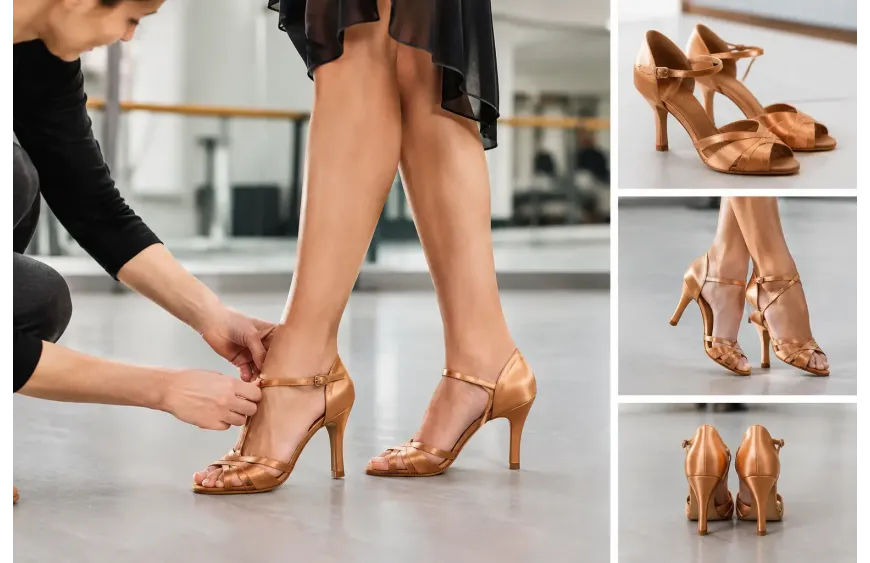
A competition shoe can look flawless from the audience and still work against you on the floor. This competition shoe fitting example shows what a secure, performance-ready fit should feel like before you commit to a pair for Latin, ballroom, smooth, or a showcase.
The goal is not to make a new shoe feel like a soft slipper. Competition shoes need a close, supportive fit that lets you point, articulate through the foot, and stay connected to your partner and the floor. The right degree of snugness depends on the shoe material, your foot shape, your dance style, and how much the shoe is expected to give with wear.
A Competition Shoe Fitting Example From Start to Finish
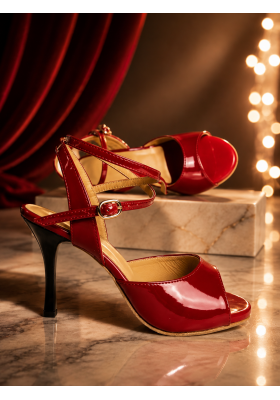
Imagine a dancer preparing for her first Latin competition. She tries on a satin sandal with a flexible sole, a closed heel counter, and crossed straps over the forefoot. She usually wears a street shoe in the same general size, but dance shoes are judged by fit and function, not by the number printed on the box.
She tries both shoes on clean, dry feet, standing tall rather than sitting. Her toes sit close to the front without being folded, curled, or pressed painfully against it. The little toe is contained by the upper rather than spilling over the edge. When she rises onto the ball of her foot, the shoe bends with her foot and her toes remain supported.
Next, she walks, takes a few controlled Latin walks, and checks a small forward-and-back weight transfer. Her heel stays seated in the heel cup. The ankle strap is secure enough that the shoe does not shift, but not so tight that it pinches or leaves an immediate deep mark. There is no gap opening across the vamp when she points her foot.
That is a promising fit. It is close, stable, and flexible, with room for the foot to work. It is not a loose, cushioned street-shoe fit, and it is not a painful squeeze that the dancer hopes will improve after one long practice.
What the fitter notices
A proper fitting considers more than length. In this example, the fitter watches whether the dancer rolls inward or outward through the foot, whether the heel lifts during a backward step, and whether the straps are doing their job. If a strap is pulled tight just to stop the foot from sliding forward, the shoe may be too wide through the forefoot or too long.
The fitter also checks the shoe’s center line. The heel should sit under the dancer’s heel rather than leaning to one side. A heel that looks centered while standing may still feel unstable during turns, so a few gentle pivots and weight changes matter. For a first fitting, controlled movement reveals more than walking across a room.
The Fit Checks That Matter on Competition Day
Competition footwear needs to hold up under adrenaline, repeated rounds, warm lights, and long periods on your feet. A shoe that feels acceptable for two minutes can become distracting by the second dance if the fit is not right.
Start at the toes. For open-toe Latin shoes, toes should be supported and presented neatly, without hanging far over the sole. A small amount of visible toe is normal depending on the design, but the foot should not slide forward with every step. For closed-toe ballroom or standard shoes, the toes should lie flat with no hard pressure at the front.
Then assess the heel. A secure heel cup reduces unwanted movement when you lower from a rise, step back, or rotate. Some movement can come from technique or from a new shoe that needs a brief break-in period, but repeated heel slipping is a fit concern. Do not assume that tightening the ankle strap will fix every problem.
Finally, assess the arch and sole. A competition shoe generally has a more flexible sole than a social or practice shoe. You should be able to feel the floor and point through the foot, while still feeling supported enough to balance. Dancers who are used to heavily cushioned footwear sometimes find this sensation unfamiliar at first. That is normal. Pain, cramping, numbness, or a sharp pressure point is not.
Latin, Ballroom, and Smooth Shoes Do Not Fit the Same Way
The best competition shoe fit depends on what your feet need to do in the dance.
Latin and rhythm shoes often place the foot in a more pointed, articulated position. Ladies’ styles may have a more open front, flexible sole, and higher heel, while men’s Latin shoes typically support strong foot action with a close, shaped fit. Because the foot is working through the ball of the foot so actively, forefoot security is especially important.
Ballroom and standard shoes usually need a steadier, more contained feel for gliding, heel leads, and sustained partnership work. Ladies’ closed-toe court shoes should hold the heel securely and keep the front of the foot comfortably aligned. Men’s ballroom shoes should feel polished and supportive without squeezing across the toes or instep.
American smooth sits between these demands. A dancer may need the stability of a ballroom shoe while still wanting freedom for open work, shaping, and turns. The right choice depends on the heel height, shoe construction, choreography, and the dancer’s experience. One shoe category is not automatically better than another.
Snug Is Right. Painful Is Not.
New dance shoes often soften, especially when made with materials that mold slightly to the foot. That is why a competition shoe is usually fitted more closely than a casual shoe. Still, “they will stretch” should never be used to justify a shoe that causes sharp pain or leaves your toes compressed from the first try-on.
A good rule is to distinguish pressure from pain. Gentle, even pressure across the upper can be appropriate in a new pair. A burning spot at the little toe, numbness in the toes, a pinched tendon across the instep, or a heel that is already rubbing raw are warning signs.
Width matters just as much as length. A dancer with a narrow heel may need a style with better heel containment. A dancer with a fuller forefoot may need a shape that allows the toes to spread naturally. The same listed size can feel completely different across brands and shoe designs, which is why trying more than one style can be worthwhile.
Test the Shoe in Dance Position
A fitting should include the movements you will actually perform. Stand in your normal posture, shift your weight, rise through the feet, and take a few dance-specific steps. If you are fitting shoes for a competition routine, bring the same type of hosiery or socks you expect to wear.
For partnered dancers, it helps to check how the shoe feels in a basic hold or while moving with a practice partner. You are looking for stability, not stiffness. You should be able to focus on timing, connection, and body action rather than constantly thinking about your feet.
If you are ordering online, use the brand’s shoe size chart as a starting point, then compare it with a pair that already fits well. Measure both feet late in the day, when they are more likely to be at their fullest, and choose according to the larger foot. If you are between sizes, the material and shoe shape become especially important. Personal fitting guidance can prevent a costly guess when you are preparing for an event.
Break In Competition Shoes Carefully
Do not save a brand-new pair for the first heat of a major competition. Wear them at home on a clean surface for short intervals, practicing simple walks, rises, and turns. Increase the time gradually so you can notice any rubbing or slipping before it becomes a bigger issue.
Avoid wearing competition shoes outdoors. Street surfaces can damage suede soles and affect the controlled slide dancers rely on. Keep the soles clean and use appropriate shoe care so the shoe maintains consistent floor contact.
For dancers in Toronto, Thornhill, and the GTA, an in-person fitting at Dancewear Champions offers the advantage of seeing how different shoe shapes respond to your own feet and movement. This is particularly useful for first-time competitors, growing youth dancers, and anyone changing heel height or dance style.
The best competition shoe does not demand attention once the music starts. It supports your technique, complements your line, and lets you step onto the floor with one less thing to worry about.
Tags competition shoe fitting, competition shoe, dance competition shoe,
Related Products
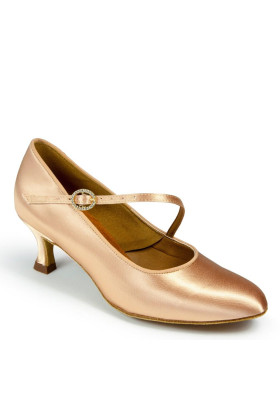
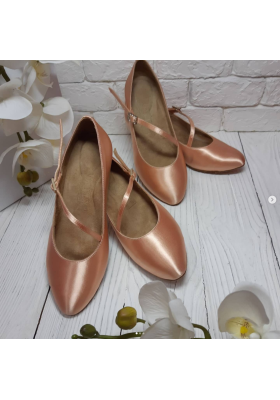

Galex - Emma - Tan-Satin - Heel - Slim 8cm
$238.00CAD
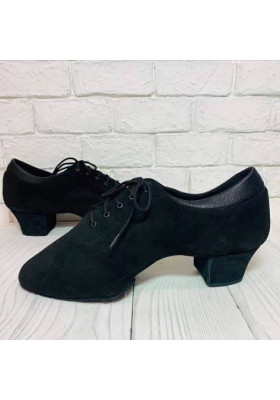
Galex - Black Nubuck - Heel 4cm
$250.00CAD

IDS - AMERICAN FLEX - TAN SATIN - 2" heel
$254.00CAD
-280x400.webp "IDS - Heather Split-Sole - BluePinkPanther - 1.5\" heel")
Galex - Tango Dance Shoes
$325.00CAD