

- 29 July, 2026
- 14
- 0
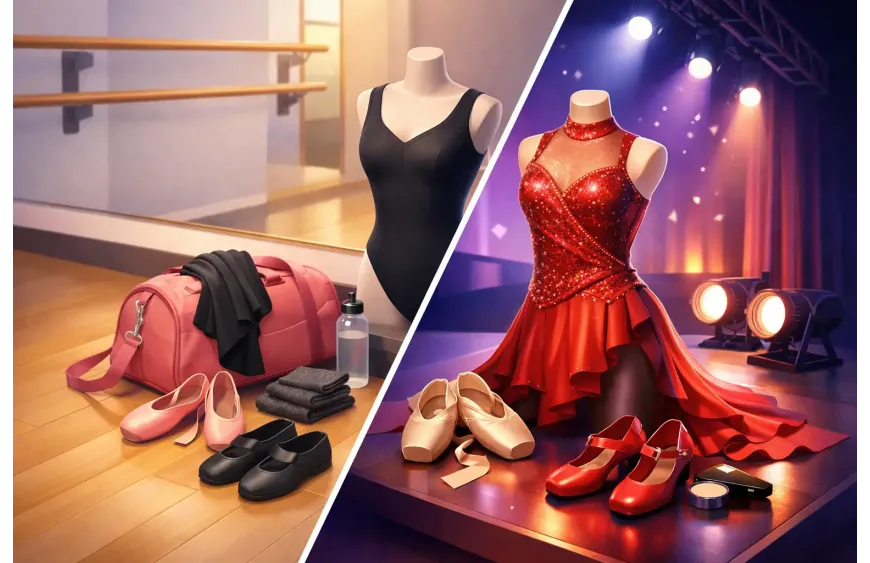
A rhinestone Latin dress may look spectacular under competition lights, but it is rarely the right choice for a two-hour technique class. The best dancewear starts with what your body needs to do: move fully, stay comfortable, and suit the dance floor in front of you. Whether you are beginning ballroom lessons in Toronto, preparing a child for a first showcase, or refining a competition wardrobe, the right clothing and shoes make it easier to focus on dancing.
Dancewear Should Match the Way You Dance
There is no single outfit that works equally well for Latin, ballroom, ballet, social dancing, and stage performance. Each discipline asks for a different combination of mobility, support, line, coverage, and visual impact. Choosing by category first helps prevent a beautiful purchase from becoming a closet item that never gets worn.
For Latin, salsa, and bachata, clothing needs to move quickly with the body. Fitted dresses, skirts with built-in shorts, bodysuits, dance tops, and stretch pants can show rhythm and body action without creating extra bulk. Fringe, mesh, sparkle, and asymmetric details are popular for showcases and competitions because they emphasize motion. For regular lessons, a simpler Latin practice skirt or comfortable dance top is often the more useful choice.
Ballroom and American smooth call for a different silhouette. A flowing skirt or gown can enhance turns and create the sweeping movement associated with standard dances. However, dancers still need enough room through the back, shoulders, and rib cage to hold frame comfortably. For practice, ladies may prefer a long practice skirt with a fitted top, while men often choose dance trousers and a shirt designed to stay neat through movement.
Ballet and gymnastics clothing have their own technical requirements. A properly fitted leotard allows instructors to see alignment, while tights, skirts, warm-up pieces, and cover-ups can be selected according to class rules and personal comfort. For young dancers especially, confirm the studio dress code before purchasing. Color, sleeve length, fabric, and shoe style may be specified.
Start With Fit, Not the Label
A dance garment should feel secure without restricting breath, extension, or rotation. That sounds simple, but dancewear sizing can vary by brand, fabric, and cut. A size worn in everyday clothing is only a starting point.
When trying on a dress, bodysuit, top, or pair of dance pants, move as you would in class. Raise both arms, take a large side step, rotate your torso, bend your knees, and sit briefly if you will be teaching or attending long events. Check whether straps stay in place, waistbands roll, mesh pulls, or seams press into the skin. Clothing that feels fine while standing can become distracting after a few dances.
Fabric matters as much as measurements. Stretch fabrics offer flexibility, but very soft or lightweight materials may provide less support. Compression-style garments can create a smooth line and help an outfit stay in place, although some dancers prefer a lighter feel for long practice sessions. Mesh can provide coverage and ventilation, but its placement should be considered carefully for your intended setting.
For children and youth dancers, avoid buying several sizes too large in hopes of getting extra wear. Excess fabric can interfere with movement and make a dancer feel self-conscious. A small amount of growing room may be reasonable in certain warm-up pieces, but leotards, bodysuits, skirts, and competition outfits should fit safely and cleanly now.
Fit Changes by Purpose
Practice clothing earns its place through repeat wear. It should wash well, permit full movement, and make you feel ready to train. A dependable black skirt, dance pants, fitted top, or leotard can carry a dancer through weekly classes far more effectively than an outfit that needs special handling after every use.
Performance and competition clothing serve a second purpose: they communicate style from a distance. A Latin dress may need movement, color, and decorative detail. A ballroom gown may need volume and an elegant line. The trade-off is that specialty garments often require more careful storage, cleaning, and travel planning. Save them for the occasions where their impact matters most.
Social dancewear sits comfortably between the two. For a salsa social, ballroom party, cruise, or dinner dance, choose something polished that lets you move freely and stay comfortable for hours. A flattering dance top and skirt, a dress with reliable coverage, or well-cut dance pants can be more practical than a full competition costume.
The Shoes Complete the Outfit
Clothing may set the look, but shoes affect every step. Dance shoes are built differently from street shoes, with soles, flexibility, heel placement, and support designed for specific floors and dance actions. Wearing proper shoes can improve turning, balance, connection to the floor, and comfort.
Latin shoes generally support pointed feet, quick weight changes, and a close connection to the floor. They often have flexible soles and heels selected to suit a dancer's experience and stability. Ballroom or standard shoes are designed with a different structure for traveling dances and sustained frame. American smooth, social dance, teaching, practice, and youth shoes can each have useful features depending on where and how often you dance.
A first-time buyer does not always need the highest heel or most specialized competition model. Beginners often benefit from a stable heel, secure straps or closures, and a fit that allows the foot to articulate without sliding. More experienced dancers may prioritize flexibility, a particular heel shape, or a competition-ready profile. The best choice depends on technique, foot shape, injury history, and the dances you do most often.
Try dance shoes on with the hosiery or socks you plan to wear. The fit should be close, particularly in soft leather or satin styles that may give with use, but toes should not be painfully compressed. If you dance in more than one style, separate pairs can be worthwhile. A shoe that is excellent for a Latin class may not be the best match for a ballroom lesson or an evening of social dancing.
Build a Dancewear Wardrobe in Stages
You do not need a full costume collection before your first class. Start with the pieces you will use every week, then add specialty items as your schedule and goals grow. For many adult dancers, that means a few comfortable practice outfits, a dependable pair of appropriate shoes, and accessories that keep hair and essentials under control.
Parents can take the same approach for young dancers. Begin with the required class basics, then purchase performance items once event details are confirmed. Keep a designated dance bag with shoes, spare tights or socks, hair accessories, garment tape if needed, and shoe-care supplies. This reduces last-minute stress on recital and competition days.
For dancers who compete, organization is part of presentation. Store gowns, Latin dresses, shirts, pants, jewelry, and shoes separately enough to prevent snags and color transfer. Bring backup items when possible, especially hosiery, hair accessories, and shoe straps. Small preparation steps protect a larger investment in a costume and help you arrive feeling composed.
Find Guidance That Respects Your Goals
Online shopping makes it easy to compare styles, colors, and sizes, but personal fit guidance can be valuable when selecting your first dance shoes, a youth competition dress, or a garment with a technical cut. Dancewear Champions helps dancers and families sort through those choices with specialist categories for ladies, men, boys, girls, plus-size dancers, practice wear, costumes, and discipline-specific footwear.
The right answer is not always the most embellished item or the most expensive shoe. It is the piece that fits your current level, your dance style, your budget, and the event ahead. A beginner attending weekly lessons needs confidence and comfort. A teacher may need polished, durable pieces that work across long days. A competitor needs clothing that meets rules, supports movement, and looks intentional under lights.
Choose one piece you will genuinely enjoy wearing to your next class. When your clothing stays put, your shoes support your steps, and your outfit suits the dance, you have more room to listen to the music and make the movement your own.