

- 01 September, 2026
- 18
- 0
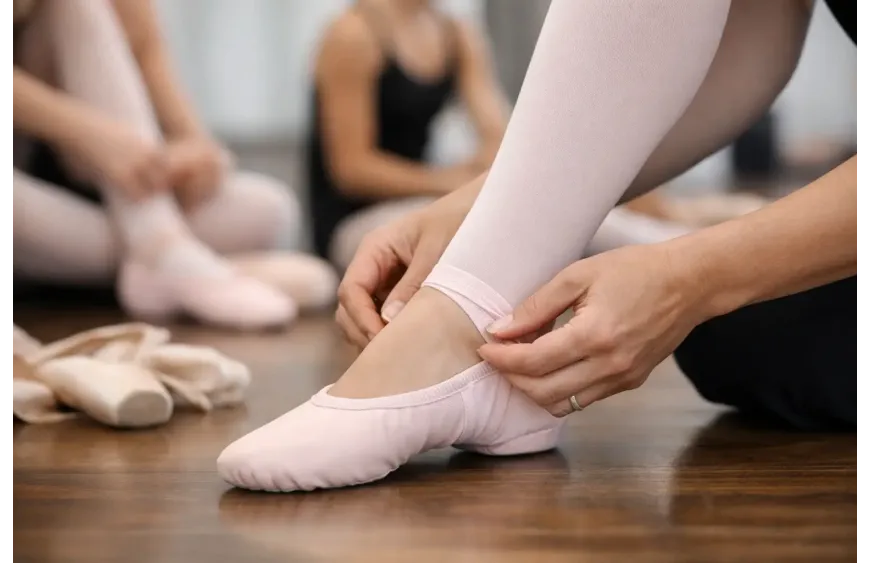
A ballet class can reveal a poor shoe fit within minutes. A heel that slips, toes that bunch, or a sole that twists under the foot can distract a dancer from posture, placement, and musicality. The right ballet slippers should feel close to the foot without pinching it, giving dancers enough security to move with confidence from pliés to traveling combinations.
Ballet Slippers Are Different From Other Dance Shoes
Ballet slippers are soft, flexible shoes designed for barre work, center practice, jumps, and turns in a ballet class. Unlike pointe shoes, they do not contain a hard box or shank. Unlike ballroom, Latin, or jazz shoes, they are not built with a raised heel or structured sole intended for a different movement pattern.
That flexibility is the point. A ballet slipper lets the teacher see the line of the foot and allows the dancer to articulate through the toes. It should support clean technique without becoming a stiff barrier between the foot and the floor.
Before choosing a pair, check the dress code for the studio or program. Many children’s ballet classes require a specific color, often pink for girls and black or white for boys, while adult open classes may allow more flexibility. Some schools also specify leather or canvas, full sole or split sole, and the preferred elastic style.
Start With the Dancer’s Class and Experience
A beginner needs a slipper that is comfortable, secure, and easy to put on correctly. For young children, a traditional full-sole style is often a practical starting point because it offers a little more structure and makes the shape of the foot easy for instructors to observe.
More experienced dancers often prefer a split-sole slipper. With separate pads under the heel and forefoot, split soles hug the arch more closely and create a more defined pointed-foot line. They can feel lighter and more responsive, particularly for dancers who have developed the strength to control their feet.
Neither option is automatically better. A full sole can be the correct choice for a teen or adult beginner, while a young dancer may be directed into split soles by a specific school. The studio requirement and the dancer’s comfort should lead the decision.
Choose the Material That Suits the Dancer
The three most common choices are leather, canvas, and stretch canvas. Each changes the feel, care routine, and fit of the shoe.
Leather Ballet Slippers
Leather ballet slippers tend to be durable and offer a slightly more supportive feel. They are a dependable option for younger dancers, frequent class use, and dancers who prefer a shoe that holds its shape. Leather can gradually mold to the foot, but it usually has less immediate stretch than canvas.
Because leather is less forgiving of an incorrect size, fit matters especially here. A shoe that starts out painfully tight will not become the right fit simply because it is worn repeatedly.
Canvas Ballet Slippers
Canvas is lightweight, breathable, and a familiar choice in many ballet programs. It gives a close-to-the-floor feeling and is often easier to keep looking tidy than leather, especially when the shoe can be hand-washed according to its care instructions.
Canvas does not stretch dramatically, so dancers should still avoid buying a size that is visibly too snug. A little room for natural movement is appropriate, but excess fabric across the toes or sides of the foot can make the shoe look loose and affect control.
Stretch Canvas Ballet Slippers
Stretch canvas gives a sleek, sock-like appearance by conforming more closely to the arch and metatarsals. It is popular with intermediate and advanced dancers who want minimal excess material when they point their feet.
The trade-off is that stretch fabric can make it tempting to size down too far. A slipper should look smooth, not strained. If the dancer’s toes curl under, the heel is pulled forward, or the fabric is under obvious tension, try another size or width.
How Ballet Slippers Should Fit
A proper fit is close and secure, with the toes lying flat and relaxed. The dancer should be able to fully point and flex the foot without the shoe sliding off the heel or cutting into the Achilles area. There should not be a large empty pocket at the front of the shoe, but there also should not be pressure forcing the toes to bend.
Width is just as important as length. A narrow foot in a wide slipper may shift inside the shoe, while a wider forefoot can spill over the sides of a narrow style. Different brands and styles suit different foot shapes, so the size on the label is only a starting point.
Have the dancer stand, rise to demi-pointe, point one foot, and walk a few steps on an appropriate clean surface. Look for a smooth fit through the arch, a heel that stays in place, and toes that remain extended rather than knuckling. The drawstring or elastic should refine the fit, not compensate for a shoe that is too large or too small.
It is also normal for dance shoe sizing to differ from everyday street shoes. Rather than relying only on a conversion, use the brand’s size chart and consider the dancer’s foot length, width, and preferred fit. This is particularly useful when ordering online.
Full Sole or Split Sole?
A full-sole ballet slipper has one continuous suede sole from heel to toe. It offers a traditional appearance and a slightly firmer underfoot feel. For many new dancers, that can provide useful feedback about how the foot is working against the floor.
A split-sole slipper has separate suede sections under the heel and ball of the foot. It allows the fabric to pull more closely around the arch, which can make the foot line look more pronounced. Many dancers enjoy its flexibility for tendus, relevés, and pointing.
Choose based on class expectations and technique level rather than appearance alone. A flattering arch line is valuable, but clean alignment and secure footing matter more.
Elastics and Drawstrings Matter
Most ballet slippers use elastics to hold the shoe in place. Pre-sewn crossed elastics are convenient for younger dancers and busy families. Some dancers prefer a single elastic or individually sewn elastics because the placement can be adjusted for a lower instep, higher arch, or narrow heel.
Drawstrings should sit comfortably inside the casing and be tied or tucked so they do not create a bump at the front of the ankle. Pulling a drawstring too tightly can cause discomfort and make the shoe look puckered. If the opening cannot stay secure without tightening it aggressively, the slipper is likely not the right size or width.
Buying Ballet Slippers for Growing Children
Parents understandably want to leave room for growth, but ballet slippers should not fit like everyday sneakers. Extra length can cause the toes to grip, while a loose heel can slip during class. Both can interfere with the child’s ability to learn correct foot placement.
A small amount of growing room is reasonable when the shoe still stays smooth and secure. Check fit regularly, particularly during growth spurts. If the toes are pressed against the end, the elastic leaves deep marks, or the heel is beginning to ride down, it is time to reassess the size.
Keep Slippers Class-Ready
Let ballet slippers air out after class rather than leaving them in a closed dance bag. Suede sole pads should stay dry and free of outdoor dirt, so dancers should put their slippers on after arriving at the studio and remove them before leaving. This protects both the shoes and the dance floor.
Canvas styles may often be gently cleaned, while leather requires more careful spot cleaning. Always follow the instructions for the specific slipper. Replace shoes when the soles become thin or detached, the heel will not stay up, or the upper fabric is stretched beyond a secure fit.
For dancers in Toronto and the GTA who would rather compare shapes in person, Dancewear Champions offers knowledgeable shoe-fitting guidance in Thornhill. A few minutes spent checking length, width, sole type, and heel security can prevent weeks of frustrating classwork.
The best ballet slipper does not compete for a dancer’s attention. Once it fits correctly, it becomes quiet equipment: close to the foot, reliable on the floor, and ready to let the movement speak.
Related Products

Ballet Pointe Shoes
$75.00CAD
Sale
Silicon Toe Pads
$25.00CAD $20.00CAD