


- 03 August, 2026
- 354
- 0
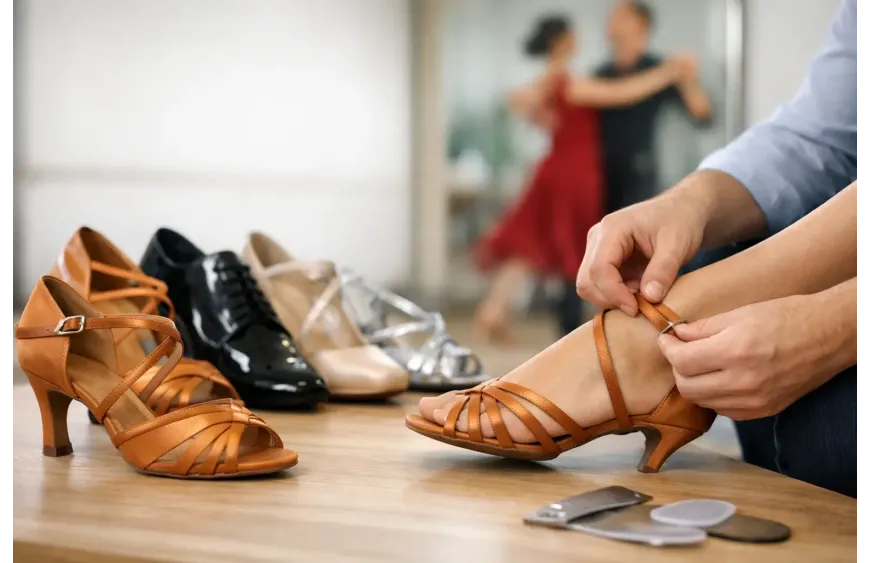
The wrong shoe can make a simple box step feel unstable, turn a smooth pivot into a sticky struggle, and leave your feet sore long before the music ends. Proper ballroom dance shoes are not just part of a polished dance look. They help you connect with the floor, maintain balance, point your feet cleanly, and move with more confidence whether you are taking your first social dance class or preparing for a competition.
For many dancers, the biggest question is not whether to buy dance shoes, but which pair will genuinely suit their dancing. The answer depends on the style you dance, how often you dance, your foot shape, the floor surface, and the level of support you need.
Why ballroom dance shoes are different
Ballroom shoes are built for movement on a dance floor. Most have suede soles, which provide controlled glide and traction. Street shoes often have rubber soles that grip too strongly, making turns harder on the knees and hips. Leather-bottom dress shoes can be too slippery or too stiff, while sneakers tend to feel bulky and can prevent the pointed foot line many ballroom and Latin dances require.
A well-made dance shoe is also lighter and more flexible through the forefoot. That flexibility lets the foot articulate through a step, especially in Latin, salsa, cha-cha, rumba, and jive. At the same time, the shoe should hold the heel securely. A shoe that slips at the back can affect balance and cause rubbing or blisters.
The best choice is not automatically the highest heel, the most decorative design, or the brand worn by an advanced dancer. A beginner taking weekly lessons may need a very different shoe from a competitor dancing multiple rounds in a weekend.
Start with the dance style you do most
“Ballroom” covers several categories, and each places different demands on footwear. If you mainly dance one style, begin there. If you enjoy social dance nights that include everything from foxtrot to salsa, a versatile practice or social shoe may be the smarter first purchase.
Standard and International Ballroom
Standard dancers need a shoe that supports long, controlled movement and stable heel leads. Ladies’ Standard shoes are often closed-toe pumps in satin, leather, or other smooth materials. They commonly have a flared heel, which gives more surface contact with the floor than a narrow heel. This can make backward steps and sustained balance feel more secure.
Men’s Standard shoes are usually black leather or patent leather with a low heel and a flexible suede sole. The fit should be close and supportive without squeezing the toes. A polished, traditional appearance matters in competition, but comfort remains essential during long practices.
Latin, rhythm, salsa, and bachata
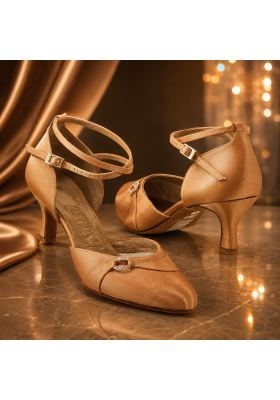
Latin shoes are generally more open and flexible. Ladies often choose strappy sandals that allow the foot to point and show the line of the toes. The heel may be slimmer than a Standard heel, and the shoe usually fits more closely through the arch.
For social salsa or bachata, a lower or wider heel can be a practical choice, especially if you are building confidence with spins. A very high heel may create a dramatic line, but it also shifts more weight forward onto the ball of the foot. That can be tiring if your ankles and calves are not accustomed to it.
Men’s Latin shoes often have a slightly higher heel than Standard shoes. This helps create the posture and weight placement used in Latin technique. They should still feel stable enough for quick changes of direction, Cuban motion, and repeated turns.
American Smooth and social dancing
American Smooth dancers may want shoes that feel elegant but stable enough for open work, turns, and traveling patterns. Ladies can wear closed-toe or open-toe styles depending on the dance, event, and personal preference. For social dancing, the most useful pair is often one you can wear comfortably for several hours. A lower heel, secure strap, and cushioned insole may matter more than a competition-level finish.
Practice shoes are another strong option. These may resemble a dance sneaker, oxford, or supportive sandal, but they are made with dance-friendly soles. They are especially useful for teachers, frequent class attendees, and dancers who need more coverage or cushioning during long sessions.
Choosing ballroom dance shoes by heel height
Heel height affects balance, posture, comfort, and the visual line of the leg. It is worth being honest about what you can control, not only what looks appealing online.
A low heel is often best for beginners, youth dancers, social dancers, and anyone returning to dance after time away. It provides a stable base and lets you focus on timing, posture, and foot placement. Mid-height heels are popular for dancers who want a more lifted look without moving into a very advanced feel.
Higher heels can lengthen the line of the leg and are common in Latin competition. However, they demand more ankle strength and consistent weight placement. If you feel pitched forward while standing still, the heel is probably too high for this stage of your dancing.
Heel shape matters as much as heel height. A flared heel offers greater stability, while a narrow heel gives a more refined look but requires stronger balance. If you have had ankle discomfort, a wider heel is often a sensible place to start.
Fit should feel secure, not painfully tight
Dance shoes should fit more closely than everyday shoes because they will stretch and mold to the foot with wear. Still, close-fitting does not mean cramping your toes or forcing your foot into a size that causes numbness. Your toes should lie naturally, your heel should stay in place, and the straps should secure the foot without cutting into the skin.
Satin and leather may relax differently over time. Leather usually softens and gives with wear, while satin may have less give. Strappy Latin sandals can also loosen slightly once the material warms and moves with the foot. A shoe that feels comfortable but just a little snug at first may become ideal after several wears. A shoe that feels sharply painful in the fitting stage will not become a good fit through determination.
Pay attention to width and arch shape. Dancers with wider feet may need a style with adjustable buckles, a more open toe area, or a wider fit option. Dancers with narrow heels should look for designs with secure ankle straps or a heel cup that prevents sliding. If one foot is slightly larger, fit the larger foot and use a small insert only if needed for the smaller side.
For local dancers, an in-person fitting can save considerable trial and error. Dancewear Champions offers personalized guidance in Thornhill, helping dancers compare shoe shapes, heel options, and sizes based on how the shoe feels in movement rather than how it looks in the box.
The sole matters more than many new dancers expect
Suede soles are the standard for a reason. They allow dancers to pivot, slide, and change direction with control. Over time, suede can become smooth or collect dirt, reducing its grip. A shoe brush restores the nap of the sole and should be part of regular shoe care.
Do not wear suede-soled dance shoes outside. Pavement, wet surfaces, and grit can quickly damage the sole and track debris onto the studio floor. Carry them in a dance bag and change into them when you arrive at class, practice, or an event.
Some social shoes use alternative soles for added durability or easier wear in mixed settings. These can be helpful where a suede sole is impractical, but they may not turn as freely as a traditional ballroom shoe. Consider the floors where you actually dance. A shoe that works beautifully in a studio may not be the best choice for a restaurant floor or community hall with uneven surfaces.
Competition shoes and practice shoes serve different jobs
Competition shoes are designed to create a clean, stage-ready look. They may be lightweight, sleek, and closely fitted, with finishes that complement formal costumes. They are a worthwhile investment when you are performing or competing regularly, particularly when your event has specific dress expectations.
Practice shoes prioritize repeat wear. They often provide more cushioning, more coverage, and a lower-impact heel. Many experienced dancers keep both: one pair for classes and practice, another pair reserved for showcases or competition. This also helps competition shoes stay clean and retain their shape.
Parents shopping for youth dancers should prioritize fit, security, and age-appropriate heel height. Children’s feet grow quickly, but shoes that are too large can make technique harder and create tripping risk. Check fit often, especially during a busy competition season.
Give new shoes a sensible break-in period
Do not wait until the day of a showcase to wear a new pair for the first time. Try them at home on a clean surface, then use them for a short lesson or practice. Adjust straps gradually, test turns, and notice whether the toe area or heel counter rubs.
Bring blister pads or tape to an early event if you are still breaking in a pair. If the shoes are leather, gentle wear is usually better than aggressive stretching. If a shoe feels wrong after a few short sessions, reassess the fit before trying to dance through the discomfort.
The right shoe should let you think about the music, your partner, and your next step instead of your feet. Start with the dance you do now, choose the support you need, and allow your footwear to grow with your confidence on the floor.
Tags Practice shoes, low heel, flared heel
Related Products

Galex - Bianka - Slim Heel
$275.00CAD
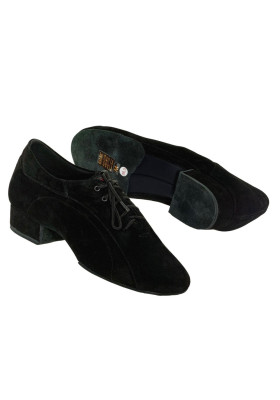
Galex - Black Nubuck - Heel 2cm
$250.00CAD
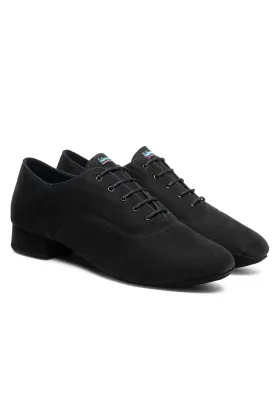
IDS - Contra Pro - Black Nubuck - 1 inch
$268.00CAD
Sale
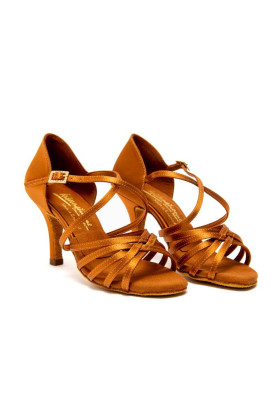
IDS - Flavia - Tan Satin - 2.5 Heel - Slim
$248.00CAD $234.00CAD

Galex - American Smooth
$250.00CAD