


- 06 August, 2026
- 269
- 0
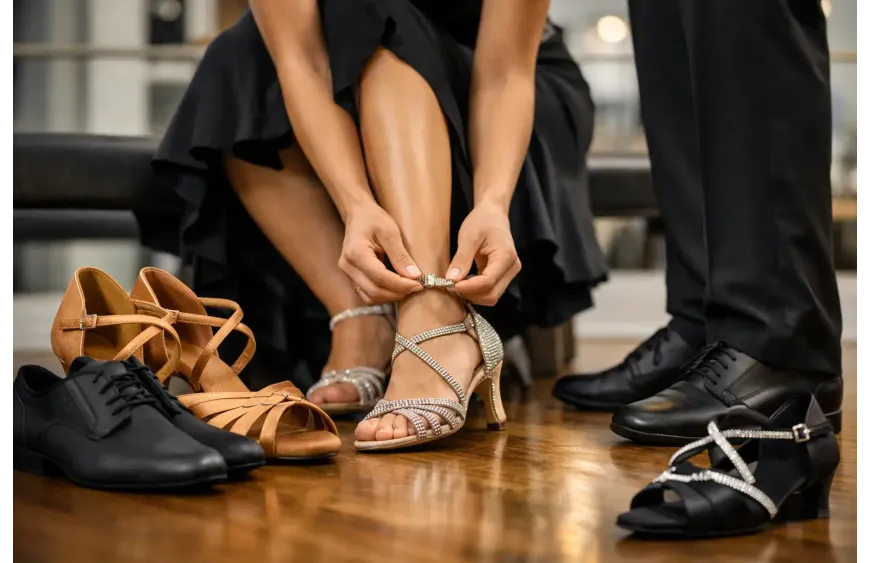
A good dance shoe disappears from your thoughts once the music starts. It supports your foot, lets you feel the floor, and stays secure through turns without pinching your toes or making you afraid of the next step. That is the real goal when learning how to choose ballroom shoes - not simply finding a pair that looks right in the mirror.
Ballroom footwear is built differently from everyday shoes. The sole, fit, heel placement, and upper all affect balance, foot articulation, and connection with your partner. The best choice depends on what you dance, how often you dance, your experience level, and what your feet need to stay comfortable over a full class, social, or competition day.
Start With the Dance Style You Do Most
“Ballroom shoes” covers several distinct categories. Choosing a shoe designed for your primary style will make learning and dancing more comfortable from the beginning.
For Standard, International Ballroom, and American Smooth, ladies often choose a closed-toe court shoe or a smooth-style sandal. A closed toe creates a clean traditional line and offers more coverage, while a smooth sandal can feel lighter and more open. Men typically wear a leather or synthetic ballroom shoe with a suede sole and a stable, low heel.
For Latin, salsa, bachata, and rhythm, open-toe Latin sandals are a common choice for women. Their flexible construction helps dancers point the toe, articulate through the foot, and create the leg line associated with these styles. Men’s Latin shoes usually have a more fitted profile and a higher Cuban heel than Standard shoes, which supports the posture and movement quality of Latin dancing.
If you take a mix of classes, attend social dances, or are just beginning, a versatile practice or social dance shoe may be the most sensible first purchase. It will not replace a dedicated competition shoe forever, but it can provide the suede sole and dance-specific fit you need while you discover which styles you enjoy most.
Fit Comes Before Appearance
Dance shoes should fit more closely than street shoes, but they should never hurt. A slightly secure fit is intentional: many dance shoes soften and mold to the foot with wear. Starting with a shoe that feels roomy can leave your foot sliding forward, reduce control, and make blisters more likely.
Your toes should reach the end of the shoe without being curled or cramped. In an open-toe sandal, the toes may sit near the front, but they should not spill over the edge when you transfer weight forward. In a closed shoe, check that the big toe is not pressing hard into the front and that the little toe is not compressed at the side.
Pay attention to the heel cup as well. Your heel should feel held in place when you walk, rise, and lower. A shoe that slips at the heel can make spins unstable and cause friction quickly. For sandals, the ankle strap should be snug enough to stabilize the foot but not so tight that it digs into the skin or restricts ankle movement.
Because sizing varies by brand and style, do not rely only on your everyday shoe size. Measure both feet, as one is often slightly larger, and fit the larger foot. Try shoes later in the day if possible, when feet are naturally a little fuller. If you are shopping in the Toronto or GTA area, an in-person fitting can be especially helpful for a first pair, a narrow or wide foot, or a dancer who is unsure about heel height.
What a Proper Dance Fit Feels Like
A well-fitted ballroom shoe feels secure across the ball of the foot, supportive at the heel, and comfortable when you stand on one foot. It should allow your toes to lengthen and point, not force them to grip for balance. Walk in the shoes, take a few slow rises, and gently shift side to side. Those simple movements reveal more than sitting down ever will.
Do not expect a painful shoe to “break in” into the correct size. Leather and satin may give a little, but no upper will create the length or width your foot does not have. Choose comfort with a close, dance-ready fit rather than hoping discomfort will disappear later.
Choose a Heel You Can Control
Heel height changes your posture, weight placement, balance, and confidence. A higher heel can create a longer-looking leg and a more pronounced dance line, but only if you can stand and move in it with control.
Beginners often do best in a lower, broader heel. A ladies’ practice shoe, closed-toe court shoe, or Latin sandal with a modest heel gives you time to develop ankle strength and learn to place weight correctly. Social dancers who spend several hours on the floor may also prefer a lower heel, even if they have experience.
As your technique improves, you may prefer a higher Latin heel for performance or competition. The trade-off is clear: higher heels can enhance presentation, yet they demand more stability through the foot and ankle. Select the height you can dance in consistently, not the height that only looks appealing while standing still.
Heel shape matters too. Flared and broader heels generally feel more stable, while slimmer heels create a more delicate look but require precise balance. For youth dancers, a low heel or approved juvenile style is typically the appropriate choice, supporting safe movement and meeting event requirements where applicable.
Understand Why Suede Soles Matter
Most proper ballroom and Latin shoes use a suede sole. Suede gives dancers controlled slide and grip on a suitable dance floor. It lets you turn without wrenching the knee while still giving enough traction to push from the floor.
Street shoes, rubber-soled sneakers, and outdoor footwear tend to grip too strongly. That can make pivots difficult and put unnecessary strain on joints. At the other extreme, a worn suede sole that has become smooth can be too slippery.
Suede needs basic care. Brush the sole regularly with a dance shoe brush to lift the nap and remove packed-in dirt. Keep ballroom shoes for indoor use only, and carry them to the studio or venue rather than wearing them outside. This protects the sole and keeps grit from reaching the dance floor.
For dancers who need a more durable option for casual practice, teaching, or travel between different surfaces, practice shoes may offer a useful balance. The right choice depends on the floor you use most. A suede-soled competition shoe remains the preferred option for a proper ballroom floor.
Pick the Right Upper and Strap Design
The upper material affects both appearance and feel. Leather usually adapts well to the foot over time and can be a strong choice for practice, social dancing, and men’s ballroom shoes. Satin is a classic competition option, particularly for ladies’ Standard and Latin shoes, with a refined finish that can complement performance wear. Synthetic materials can offer structure and a more budget-conscious entry point, though the feel and amount of stretch vary.
For Latin sandals, look beyond the number of straps. A design with straps positioned securely across the forefoot can help hold the foot in place. A more open design may show a beautiful foot line, but it may offer less containment for a dancer with a narrow foot or someone still building confidence in turns.
Buckles should fasten securely and sit where they will not rub the ankle. Quick-fastening hooks can be convenient for changing shoes at events, while traditional buckles allow precise adjustment. Neither is automatically better - comfort and security matter more than the closure style.
Match Your Shoes to How You Dance
A dancer who attends one weekly social class has different needs from a competitor preparing for a showcase. Be honest about how the shoes will be used. A versatile pair can be ideal for lessons and social events, while competitors often benefit from separate shoes for Standard and Latin so each pair supports the required technique and presentation.
Teachers and frequent practice dancers may prioritize cushioning, stable heels, and durable uppers because they spend so many hours on their feet. Performance dancers may place more emphasis on color, silhouette, and a shoe that complements a costume. Both priorities are valid, but comfort should remain non-negotiable.
Parents choosing shoes for children should avoid buying far too large “to grow into.” Excess room makes it harder for a young dancer to balance and point their feet accurately. A close fit with appropriate room at the toes is safer and more useful than an oversized shoe.
Give New Shoes Time Before a Big Event
Never make your first full wear a competition, wedding performance, or important showcase. Wear new shoes during a short practice at home or in class, then gradually build up your time in them. This lets the upper settle to your foot and helps you identify any rubbing points early.
Bring a backup pair to longer events if you have one, especially when you are dancing multiple rounds or teaching. A small amount of preventive care can also extend the life of your shoes: air them out after dancing, avoid leaving them in a hot car, and replace heel tips when they show noticeable wear.
The right ballroom shoes should make you feel more grounded, not more cautious. Choose the pair that fits your feet, supports the style you actually dance, and gives you the confidence to take the next step fully.
Tags Ballroom Shoes, Ballroom dance Shoes, Latin Shoes, Latin dance Shoes, Standard Shoes, Standard dance Shoes, men dance Shoes, women dance Shoes, youth dance Shoes. children dance Shoes, girls dance Shoes, boys dance Shoes
Related Products
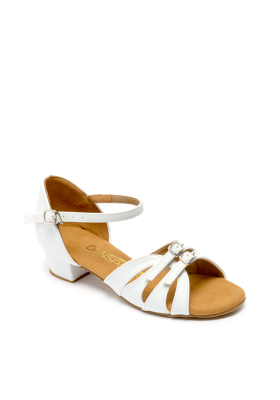
IDS - Dansport - Girls - 1.25"
$180.00CAD

IDS - Mia - Tan Satin - 2" Heel
$244.00CAD
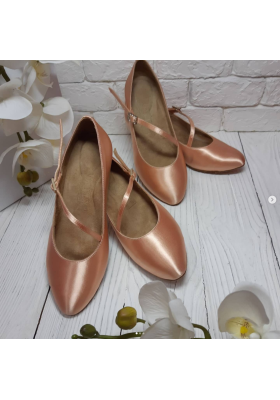

Galex - Emma - Tan-Satin - Heel - Slim 8cm
$238.00CAD

Galex - Bianka - Slim Heel
$275.00CAD
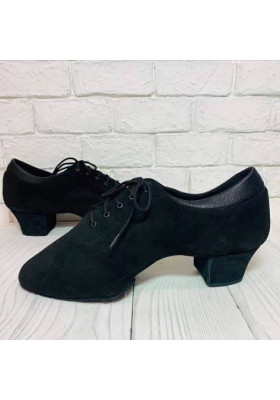
Galex - Black Nubuck - Heel 4cm
$250.00CAD
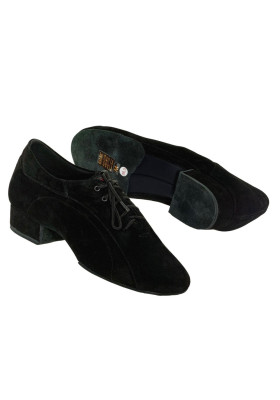
Galex - Black Nubuck - Heel 2cm
$250.00CAD
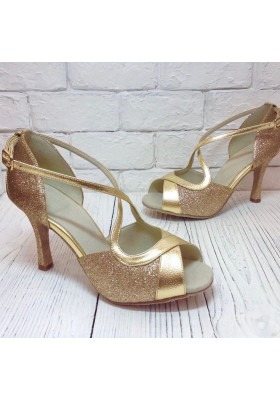
Galex - Gold - Heel - Slim 4-9 cm
$275.00CAD

IDS - Flavia Sequin - Black Satin - 3" Heel
$248.00CAD