

- 06 October, 2026
- 18
- 0
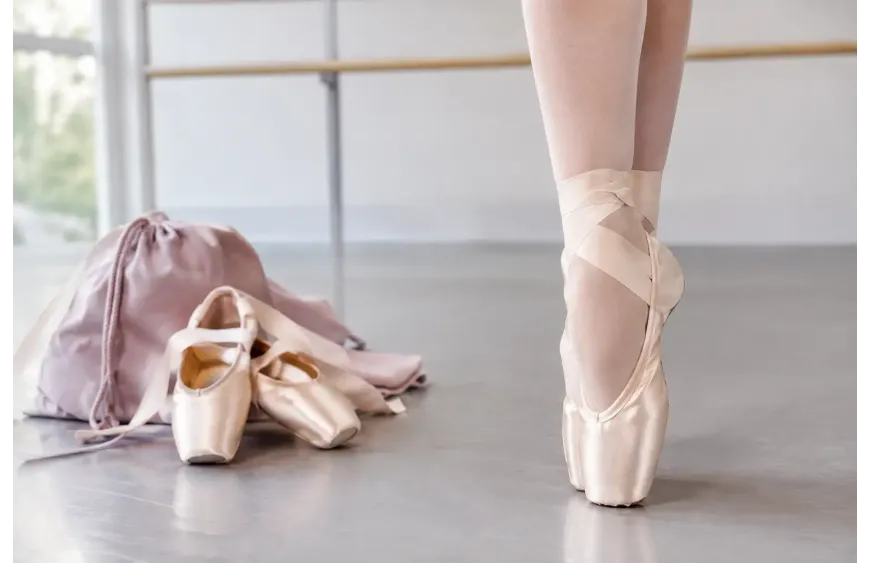
A first pair of pointe shoes is a milestone, but it is not simply a more advanced ballet slipper. A pointe shoe is a structured piece of footwear designed to support a dancer while they work on the tips of their toes. The right timing, fit, preparation, and ongoing care all matter because small details can affect comfort, technique, and foot health.
For dancers and parents, the goal is not to rush toward pointe work. It is to make the transition when the dancer has the strength, control, and professional guidance to use the shoes as intended. A beautiful line begins with safe, well-supported basics.
When Is a Dancer Ready for Pointe Shoes?
Readiness is determined by more than age or enthusiasm. A ballet teacher should be the first person to assess whether a student is ready to begin pointe work. Teachers see how a dancer aligns their legs, uses turnout, controls their ankles, and maintains posture through combinations. They can also consider training consistency and the demands of the dancer's current class schedule.
Many students begin pointe only after they have built several years of regular ballet training. The exact point varies. A dancer who has trained consistently with sound placement may progress differently from a dancer of the same age who is still developing strength or has trained less frequently. Growth patterns, foot development, and individual technique also affect the decision.
A teacher may look for a dancer who can maintain turnout from the hips rather than forcing it through the knees and feet, hold a lifted torso, point the foot fully, and work through demi-pointe with control. Strong ankles are essential, but so are stable knees, a responsive core, and the ability to follow corrections. Pointe work magnifies habits. Good technique is not about looking polished for one exercise; it is about repeating correct movement safely.
Parents should feel comfortable asking the teacher what preparation is needed before scheduling a fitting. If a dancer has pain, a recent injury, or a concern about their feet, it is wise to address that before beginning pointe work. A pointe shoe cannot correct weak alignment or replace proper training.
Why Professional Pointe Shoe Fitting Matters
Pointe shoes are not sized like street shoes, and two shoes marked with the same size can feel completely different. The shape of the box, width, vamp length, wing height, shank strength, heel shape, and overall profile must work with the dancer's individual foot. This is why a professional fitting is so valuable, particularly for a first pair.
During a fitting, the dancer should wear the tights they normally use for ballet class and bring any padding their teacher has recommended. The fitter will assess the length and width of the foot, toe shape, arch profile, heel, and how the foot behaves while standing flat, in demi-pointe, and en pointe. The dancer should expect to try more than one style. Finding a suitable shoe is a process of comparing support, placement, and comfort rather than choosing the prettiest satin color or the shoe a friend wears.
A properly fitted shoe should feel snug and secure without painful pressure, pinching, or numbness. The toes should lie as flat as possible inside the box, with the dancer supported rather than sinking down into it. The heel should stay in place, and the shoe should not twist or leave major gaps. At the same time, a shoe that is too tight can restrict the foot and create problems just as quickly as a shoe that is too large.
The fitter will also consider the shank, the firm supportive layer along the sole. A shank that is too hard may make it difficult for a dancer to roll through the shoe and reach a fully stretched foot. One that is too soft may not offer enough support. The right choice depends on the dancer's strength, foot shape, and stage of training. Stronger is not automatically better.
How Pointe Shoes Should Fit
The best fit supports the dancer's foot in a neutral, lifted position. When the dancer rises en pointe, the platform should provide a stable surface, the box should hold the toes without crushing them, and the shoe should follow the line of the foot. A dancer should not feel as though they are falling forward, rolling to one side, or gripping desperately with their toes.
There are several fit issues worth recognizing early. If the toes are sharply bent, the shoe may be too narrow, too short, or the wrong shape. If the dancer sinks deeply into the box, the shoe may be too wide, too large, or too soft for their current needs. If the heel slips off, the length, heel shape, or drawstring adjustment may need attention. Painful rubbing, blisters, persistent numbness, or pressure on one toe are reasons to stop and reassess rather than trying to break the shoe in through class.
Padding should protect the toes without changing the fit dramatically. Some dancers prefer thin gel pads, while others use fabric toe pads or minimal protection based on their teacher's and fitter's recommendations. Thick padding can make a shoe feel larger and may allow the foot to slide. Toe spacers, lambswool, and tape can also be useful in specific situations, but they should be selected for an individual need rather than added automatically.
Ribbons, Elastics, and Preparation
Pointe shoes are usually prepared with ribbons and elastics before they are worn in class. Placement affects how securely the shoe sits on the foot, so dancers should follow their teacher's instructions or ask for guidance before sewing. Ribbons help support the ankle line and create a polished performance appearance, while elastics can help keep the heel in place.
Do not cut, bend, wet, hammer, or heavily alter a new shoe unless the teacher or fitter has advised it. Dancers often hear about personal break-in methods, but a technique that works for one experienced dancer can weaken a shoe or change its support in an unhelpful way for another. First pairs should be treated carefully. The dancer is learning both pointe technique and how their own shoes respond.
Building Safe Pointe Work Habits
Pointe work should begin in a structured class setting, usually with barre exercises before center work. The dancer needs time to learn how to rise through the feet, maintain alignment, and come down with control. Practicing unsupported pointe exercises at home is not a substitute for supervised instruction and can create risky habits.
Between classes, dancers can support their progress with the conditioning their teacher recommends. This may include careful foot articulation, calf and ankle strength, balance work, and core stability. Flexibility has a place, but forcing the arches or stretching through pain does not build the control needed for pointe.
It is also helpful to keep a simple eye on changes. Feet can grow, swell, strengthen, and change shape, especially for young dancers. A shoe that fit well a few months ago may no longer be right. Competitive schedules, intensive rehearsals, and frequent classes can also change how quickly a shoe softens and wears out.
Caring for Pointe Shoes Between Classes
Pointe shoes absorb perspiration and need time to dry fully. Remove any padding after class and allow the shoes to air dry in a breathable bag or open space. Avoid leaving them in a sealed plastic bag, hot car, or damp dance bag. Heat and moisture can damage the materials and encourage odor.
Check the shoes regularly for softening shanks, loose ribbons, worn satin, fraying platforms, or a box that no longer supports the dancer. Pointe shoes are not meant to last indefinitely. Their lifespan depends on the dancer's strength, frequency of use, technique, and the shoe's construction. When a shoe no longer provides reliable support, replacing it is part of responsible training, not an optional upgrade.
For dancers in Toronto and the GTA, an in-person fitting can make the first-pair experience much less intimidating. Dancewear Champions can help families approach the process with knowledgeable, patient fit guidance and the practical accessories that support class and performance needs.
Pointe shoes represent progress, but they should never be a race. Let the teacher set the timing, let the fitting guide the choice, and let the dancer build confidence one carefully corrected class at a time.
Tags pointe shoes, ballet slippers, half toe, toe pad
Related Products

Ballet Pointe Shoes
$75.00CAD
Sale
Silicon Toe Pads
$25.00CAD $20.00CAD