


- 09 November, 2026
- 14
- 0
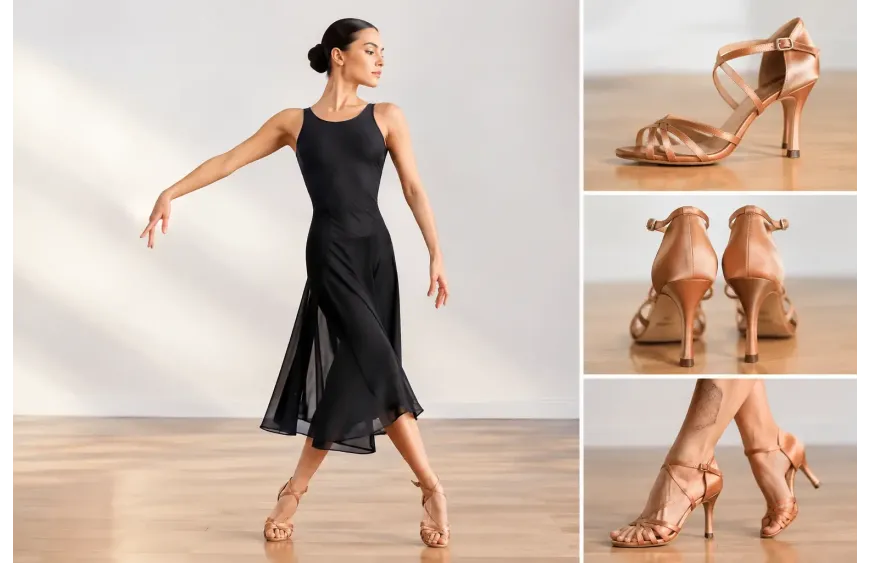
A ballroom shoe can look perfectly fine until the heel catches in a floor seam, sinks into a softer surface, or leaves a mark where it should not. If you are asking, what are ballroom heel flares, the short answer is that they are small protective attachments fitted over the heel tip of many ballroom shoes. They widen the heel’s contact point with the floor, helping dancers feel steadier while protecting both the shoe and the venue floor.
For social dancers, students, teachers, and competitors, heel flares are a practical accessory rather than a decorative extra. The right pair can make a noticeable difference in how a narrow heel behaves during turns, backward steps, and long sessions on the dance floor.
What Are Ballroom Heel Flares Used For?
Ballroom heel flares are usually clear or neutral-colored plastic caps that fit snugly over the bottom of a dance shoe heel. Their base is wider than the original heel tip, creating a small flare at the bottom. You may also hear them called heel protectors, heel caps, or heel guards. While the terms are often used interchangeably, a true flare usually refers to a protector with a widened base.
They are most common on ladies’ ballroom, standard, American smooth, and social dance shoes with slim or higher heels. Some Latin dancers use them as well, particularly when a studio, competition, or social venue requires heel protection. They are generally not used on men’s ballroom shoes, which typically have broader, built-in heel bases.
The main purpose is simple: a narrow dance heel concentrates your weight on a very small point. A flare spreads that pressure over a slightly larger area. That helps reduce the chance of the heel piercing or denting a wood floor, catching in a crack, or wearing down too quickly.
Why Dancers Wear Heel Flares
The benefit dancers notice first is often stability. A standard dance heel is designed to support elegant lines and controlled movement, but a very narrow heel requires accurate weight placement. A heel flare gives the base a little more surface area, which can feel more secure when you are learning to lower through the foot, settle into a back step, or maintain balance in closed ballroom hold.
That does not mean a heel flare turns any shoe into a beginner shoe. Technique, fit, heel height, and ankle strength still matter. However, it can be a helpful confidence-building addition for dancers adjusting to their first pair of ballroom heels or returning to dancing after time away.
Heel flares also protect expensive dance shoes. Repeated dancing on hard surfaces can wear through heel tips. Once the tip becomes uneven or worn down, the shoe may feel unstable and can begin to damage the floor. A properly fitted protector takes much of that wear instead. Replacing a small accessory is much easier than repairing a worn heel.
Many dance venues also prefer or require them. Studios with wood floors, banquet halls, cruise ship dance floors, and competition venues may have policies intended to prevent heel marks and floor damage. If you are attending an event for the first time, check the organizer’s shoe rules before you go. Bringing a spare pair is a smart habit for frequent dancers.
Heel Flares vs. Suede Heel Tips
It is easy to confuse heel flares with the suede material on the bottom of a ballroom shoe. They serve different purposes.
The suede sole under the ball of the foot allows dancers to glide and pivot with controlled traction. It is a key feature of ballroom and Latin dance shoes. The heel tip, meanwhile, is the small piece at the bottom of the heel that touches the floor when you place weight through the back of the shoe.
A ballroom heel flare goes over that heel tip. Depending on the design, it may have a smooth plastic base, a textured surface, or a small suede-like insert. The material affects how it feels on the floor. A smooth protector may move more easily on a polished surface, while a textured option can feel more grounded. Neither is automatically better. The best choice depends on the floor, your dance style, and the rules of the venue.
For example, a dancer doing slow foxtrot or waltz on a well-maintained ballroom floor may prioritize a clean, unobstructed glide. A newer social dancer on a less predictable floor may prefer the added reassurance of a secure, protective cap. If the floor feels unusually sticky or slippery, address that issue before assuming the flare alone is the answer.
Choosing the Right Ballroom Heel Flare
Fit matters more than appearance. Heel flares are not one-size-fits-all because dance shoes come with different heel shapes, widths, heights, and tip dimensions. A cap that is too small can split or pop off during a dance. One that is too large may twist, collect debris, or change how the heel contacts the floor.
Start by identifying the heel type on your shoe. Flared ballroom heels, slim Latin heels, contour heels, and practice-shoe heels can all need different protector shapes. Some shoe brands use distinctive heel profiles, so comparing the flare opening to the actual heel tip is more reliable than choosing based only on heel height.
Clear flares are popular because they blend into most shoe colors and competition looks. They are also easy for a teacher or adjudicator to overlook visually while still giving the floor protection a venue expects. Black or tan options can make sense for darker practice shoes or shoes where a clear cap is less practical.
Consider your use as well. If you dance several times a week, teach, or attend long socials, keep spare flares in your dance bag. They can gradually wear, loosen, or pick up small scratches. A dancer who performs occasionally may get much longer use from a pair, but should still inspect them before each event.
How to Put Heel Flares On Correctly
Heel flares should be installed only on clean, dry heel tips. Brush away lint and check that the original heel tip is not badly worn, cracked, or tilted. A protector cannot correct structural damage to the heel. If the shoe is already uneven, it needs proper repair before you dance in it.
Hold the shoe firmly and align the flare opening with the bottom of the heel. Press it on evenly rather than forcing one side first. The cap should sit flush and straight, without gaps or a noticeable tilt. Give it a gentle twist and tug to make sure it is secure.
Do not use tape, glue, or improvised padding to make an incorrectly sized flare fit. Those quick fixes can fail on the floor and may leave residue on your shoes. They can also create an uneven surface that affects balance. If a flare slips off repeatedly, the issue is usually size, shape compatibility, or a worn heel tip.
Before a class, social, or competition, take a few cautious steps and practice a controlled weight transfer. Notice whether both heels feel even. If one shoe feels higher, catches unexpectedly, or moves differently from the other, remove the flare and inspect the fit.
When Heel Flares May Not Be the Best Choice
Heel flares are useful, but they are not required for every dancer or every shoe. Very low, broad heels may already distribute weight well enough that a flare adds little benefit. Some dancers also prefer the unaltered feel of their shoe on familiar, approved ballroom floors.
They can slightly change the sensation of the heel, especially on a narrow Latin shoe. For dancers who rely on precise foot pressure and fast weight changes, that difference may take a practice session or two to get used to. It is better to test new flares in class or at home than wear them for the first time at an important performance.
If you are a beginner, do not choose a high or unstable heel simply because you plan to add flares. A comfortable shoe with a suitable heel height, a secure fit through the arch and heel, and enough room for your toes will do more for your dancing than any accessory. Heel flares support a properly fitted dance shoe; they do not replace proper shoe selection.
Care Tips for Longer-Lasting Heel Protection
After dancing, wipe the flares clean if they have collected dust or residue from the floor. Check for cracks, worn edges, or stretching around the opening. Store your shoes in a dance bag where the heel protectors will not be crushed or bent against heavier items.
It is also worth checking your heel tips each time you replace flares. An even, intact tip helps the shoe sit correctly. If you notice one heel wearing faster than the other, it may simply reflect your movement patterns, but it can also be a useful prompt to ask a teacher about your weight placement.
For dancers in the Toronto and GTA area who are unsure which shape fits their shoes, a proper in-person fitting can remove the guesswork. Dancewear Champions can help identify the correct heel protector and make sure it sits securely before you head to class, a social, or a competition.
A small heel flare will never substitute for good posture, controlled footwork, and a shoe that truly fits. But when it is the right size and used on the right floor, it is one of those quiet dance accessories that lets you focus less on your heels and more on enjoying the next song.
Tags Ballroom Heel Flares. slim heels, dancing heels, Ballroom dance shoes, smooth dance shoes
Related Products


Galex - Emma - Tan-Satin - Heel - Slim 8cm
$238.00CAD

IDS - AMERICAN FLEX - TAN SATIN - 2" heel
$254.00CAD

IDS - Flavia Sequin - Black Satin - 3" Heel
$248.00CAD
Galex - American Smooth
$250.00CAD

IDS - Flavia - Tan Shimmer - 2.5 Heel - Slim
$248.00CAD